Evenings can slip away into scrolling, half-watched shows and one more email. A short coloring routine is a gentle alternative: a set time, a familiar corner and a page that asks for nothing more than color. It will not fix a hard day, but it can help you leave the day behind and settle into the evening.
Coloring before bed works best as a small, repeatable habit. This guide shows how to build a relaxing evening coloring routine that is easy to keep, from the lamp you color under to the page you pick on tired nights.
In short
- Same time, same corner, everything ready in one box.
- A warm but bright lamp aimed at the page.
- Phone in another room; quiet sound or silence.
- A simple page on tired nights, a small palette chosen in advance.
- Ten minutes counts. Stop when the time is up.
Why a routine helps
Doing the same small things in the same order sends a clear signal that the day is winding down. When coloring becomes part of that sequence, starting takes no effort: the pencils are out, the page is waiting, and you know what comes next.
A routine also removes decisions. Tired evenings are when choosing feels hardest, so the more you prepare in advance, the easier it is to begin.
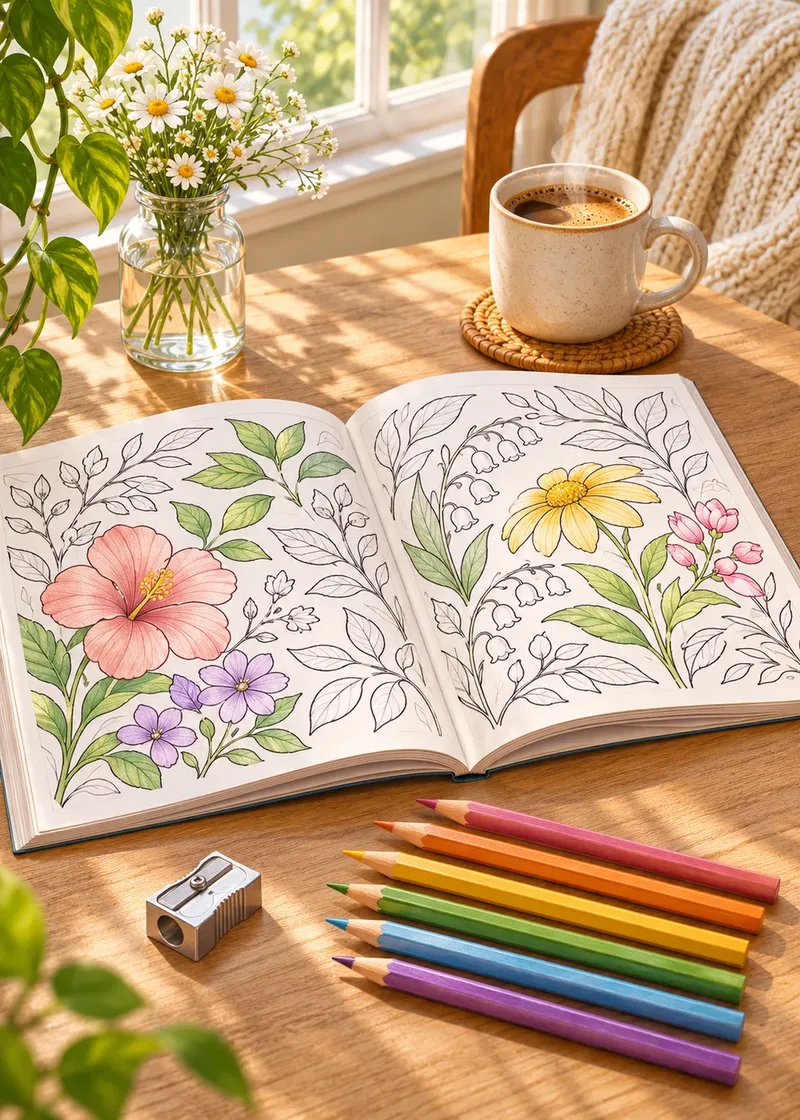
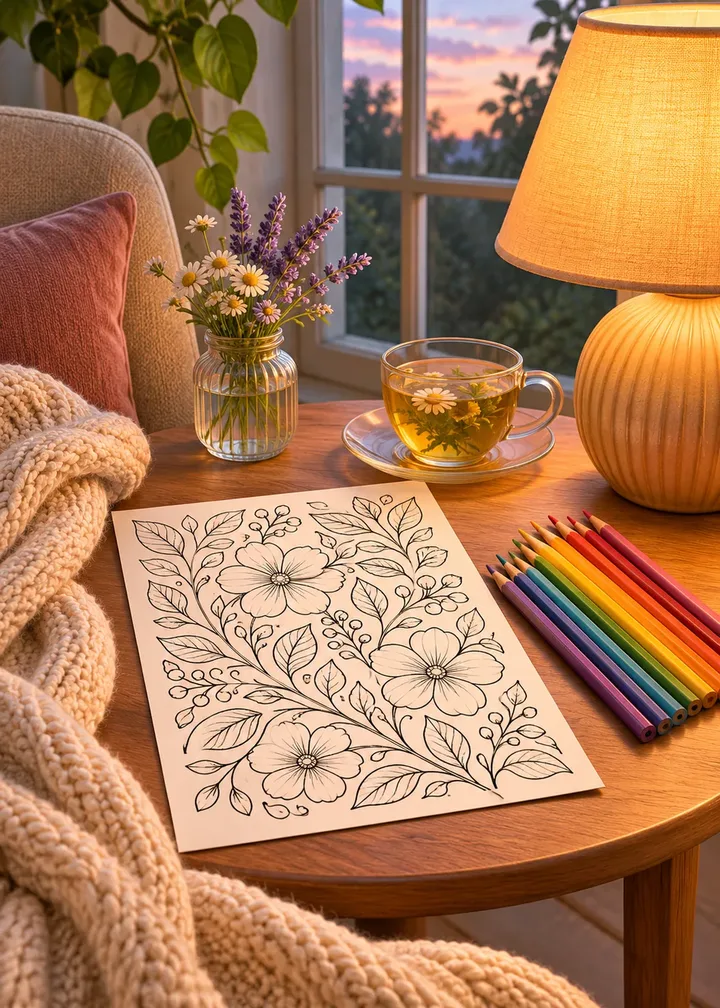
Set up a cozy coloring corner
You do not need a dedicated room. A corner of the kitchen table or a comfortable chair with a lap board works perfectly. What matters is that everything is ready.
- A tray or box holding pencils, sharpener, eraser and a few printed pages, so setup takes ten seconds.
- A firm surface. A clipboard or lap board keeps the page flat on the sofa.
- Something comforting nearby: a blanket, a warm caffeine-free drink, quiet music or an audiobook.
What light is best for evening coloring?
Light is the part most people get wrong. A dim, cozy room looks relaxing, but coloring in it strains your eyes and makes colors hard to judge: blues and purples look alike, and you press harder to see your strokes.
Aim for two sources. Keep the room softly lit with warm lamps, and put one brighter lamp close to the page, angled from the side opposite your drawing hand so your hand does not cast a shadow. A warm-white bulb keeps the evening mood. If you care about exact colors, check a finished page in daylight the next morning: colors chosen under warm light often look a little cooler by day.
Choose a regular time
Pick a moment that fits your evening, like right after dinner or half an hour before bed, and protect it. Consistency matters more than length; a short session most evenings builds the habit faster than a long one now and then.
If you like, set a gentle reminder, then put the phone in another room or face down while you color.
10, 20 or 30 minutes: three session plans
| Session | What to color | How it goes |
|---|---|---|
| 10 minutes | One section of a simple page | Open the box, color one flower or ring, close the box |
| 20 minutes | Half a medium-detail page | Two minutes to pick colors, fifteen to color, a few to tidy up |
| 30 minutes | A full simple page or a corner of an intricate one | Palette, base colors, then a little shading if energy allows |
The ten-minute plan is the one that keeps the habit alive on busy weeks. On a slow weekend, an intricate design can stretch across several evenings.
Put screens away
The biggest benefit of evening coloring is the break from screens. Bright, constantly changing content keeps the mind busy; a coloring page does the opposite. If you want background sound, choose something you do not need to look at: an album, a podcast, or simply silence.
Pick the right page for your energy
Match the page to how you feel, not to how ambitious you would like to be.
- Very tired: bold, simple designs with large shapes. A simple mandala or a big flower fills quickly and feels satisfying.
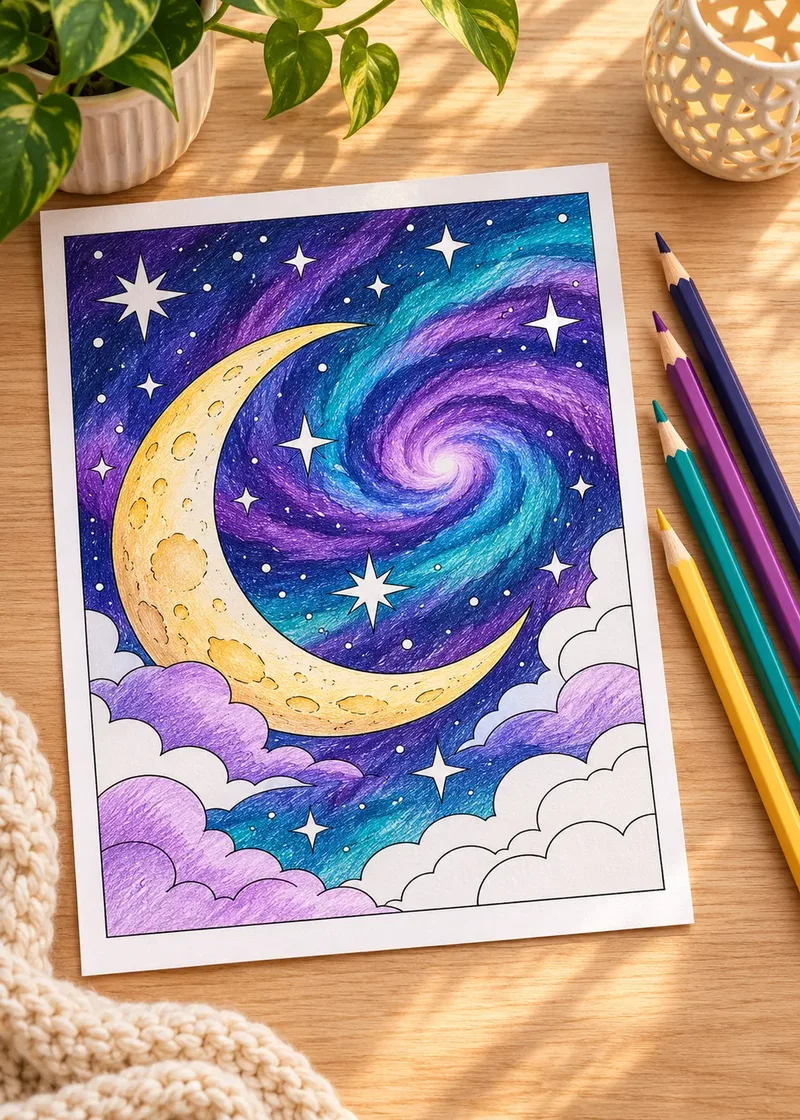
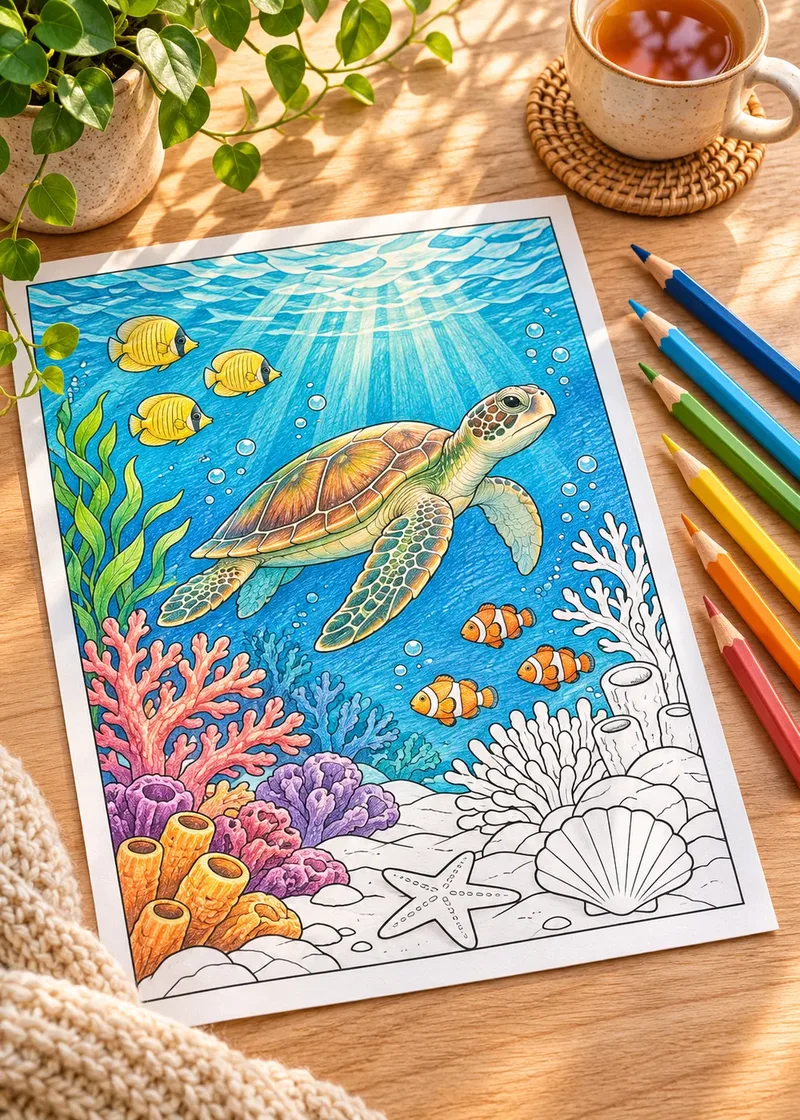
- Calm but awake: medium-detail scenes, like a cozy house, a garden or a night sky.
- Energetic and focused: intricate patterns with small spaces. Split them over several evenings.
Keep a few printed pages at each level so you can choose in a second. Our guide to the best paper for printing coloring pages helps you prepare a small stack, and the free coloring pages give you plenty to print.
Use a simple, calm palette
Evening is not the time for big color decisions. Choose three to five colors before you start, or keep a few favorite palettes written on a card in your box. Soft, cool palettes suit the evening mood well. For more, see our night sky palette ideas.
- Lavender
#B9A7D6large shapes - Dusty blue
#7F9CC0background - Sage green
#9DB59Aleaves - Deep indigo
#3B3F73shading - Warm cream
#F3E6C8soft accents
Slow your pace and close the session
Coloring is naturally calm, but you can make it more so:
- Use small, slow circles instead of fast strokes.
- Notice details: the way two colors meet, the sound of the pencil.
- Let go of finishing. Stop when your time is up, even mid-petal.
If your mind drifts to tomorrow’s plans, simply bring your attention back to the next shape.
Write your routine card
On an index card, write your five steps: time, corner, phone away, page, closing ritual. Keep it on top of your coloring box. On a tired night, you just follow the card.
End with a small ritual so the routine has a clear finish. Put the pencils back, set the page on top for tomorrow, and turn off the lamp. Writing the date on the back of each page turns the stack into a quiet record of evenings well spent.
Coloring with kids at bedtime
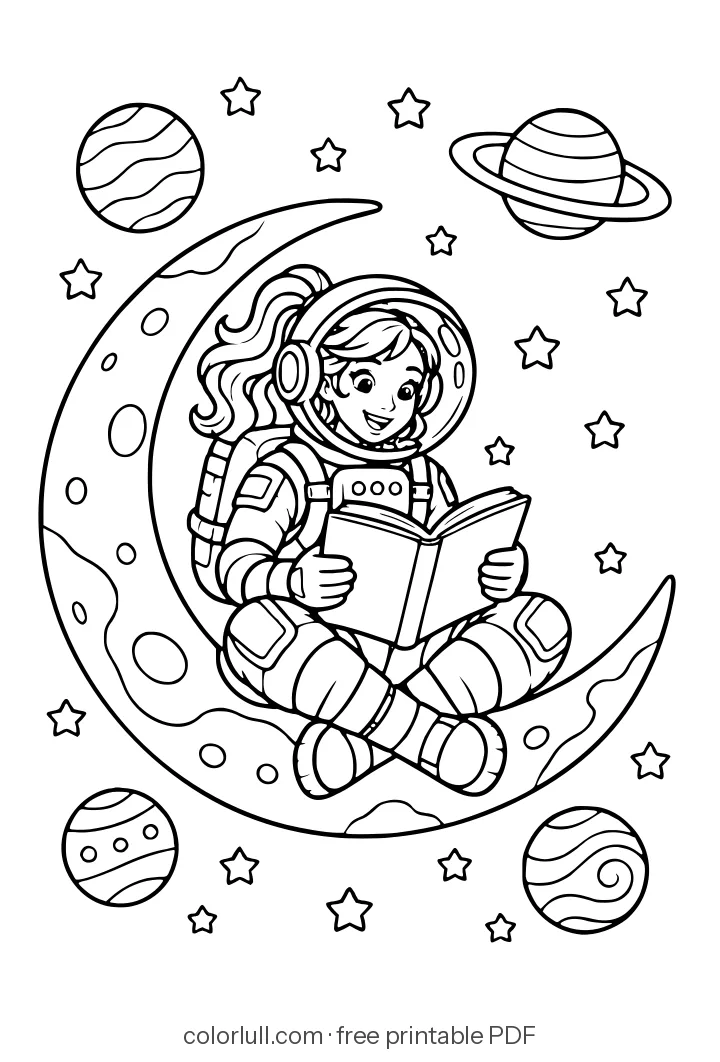
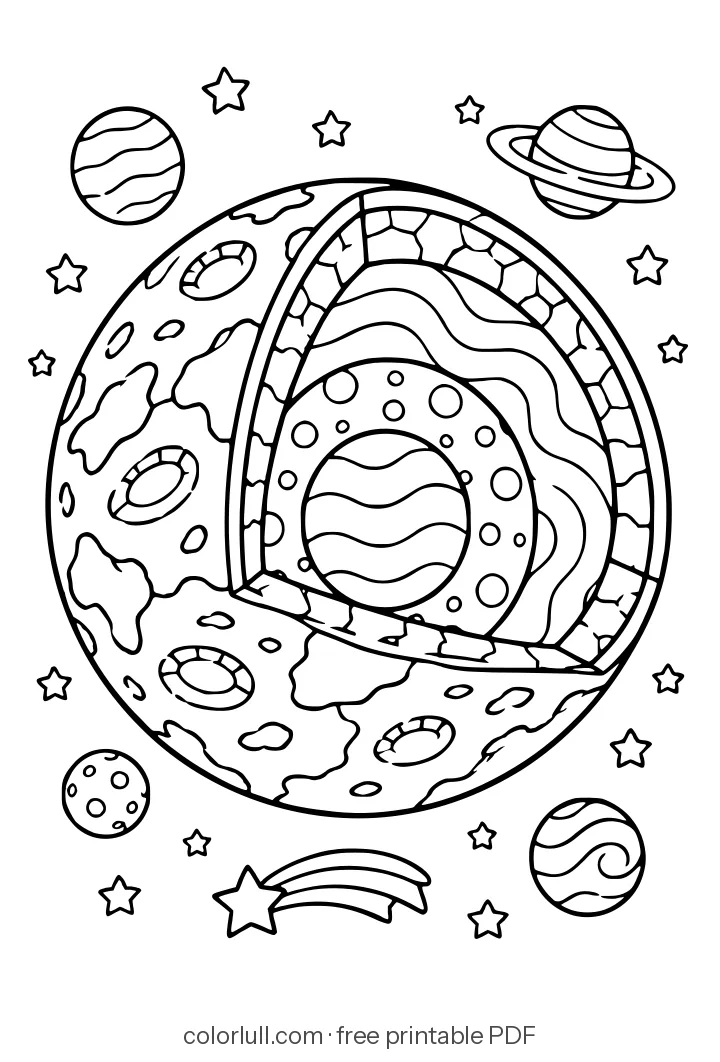
A shared coloring moment can be a gentle part of a family’s evening. Give each child a simple page with large shapes, keep the palette small, and set a clear end, like “until the song finishes”. Coloring side by side, without screens, is a lovely way to bring the energy down before stories and lights out. For older kids who love the night sky, our space coloring activities for kids pair well with a calm evening.
Ideas to keep it fresh
- Theme weeks: mandalas one week, animals the next, fall and winter scenes after that.
- Palette challenges: color the same design twice with two palettes and compare.
- Color with someone: a partner or a friend, each with their own page.
Missing a few evenings is normal. Do not try to catch up; just start again with the simplest page in your box. A routine is something you return to, not a streak you must protect.
Frequently asked questions
Is coloring before bed a good idea?
For many people it is a pleasant, screen-free way to wind down. Keep sessions short, use a bright enough lamp, and choose simple pages so it stays relaxing rather than demanding.
How long should an evening coloring session be?
Ten to thirty minutes is plenty. A short session most evenings builds the habit better than a long one now and then.
What kind of coloring pages are best at night?
Pages with larger shapes and clear lines, like simple mandalas, flowers or night scenes. Save very intricate designs for evenings when you feel focused.
What light should I use for coloring in the evening?
A warm-white lamp placed close to the page, plus soft light in the room. Dim light makes colors hard to tell apart and tires your eyes.
Can kids join an evening coloring routine?
Yes. Give them simple pages, a small set of colors and a clear end point, such as the end of a song, before stories and lights out.
New to coloring? Start with our beginner’s guide to adult coloring, then make it part of your evenings. Enjoy the calm.