Knowing how to choose a coloring book for kids saves you from the most common letdown: a book that looks great on the shelf, then sits untouched because the pictures are too busy, too babyish, or the markers soak straight through to the next page. The right book matches three things: your child’s age and patience, the tools they already use, and a theme they genuinely love.
This guide is written for parents, grandparents, teachers and anyone shopping for a young colorist. It walks you through line thickness and detail by age, the practical details most listings bury (single-sided pages, paper, binding), the red flags to skip, and how to turn a coloring book into a gift that actually gets used.
In short
- Match the detail to the age: thick lines and big shapes for little ones, full scenes from about 8.
- Choose single-sided pages if your child uses markers or likes to display finished pages.
- Let your child’s favorite subject pick the theme: interest keeps them coloring.
- Test the level first with a free printable page before you buy a whole book.
- Pair the book with tools that suit the age, not the fanciest set on the shelf.
Start with your child, not the cover
Before you look at a single book, think about the child who will use it. Three quick questions do most of the work.
- How long do they color in one sitting? A preschooler who colors for five minutes needs pages they can finish in five minutes. A ten-year-old who happily spends an afternoon on a page will be bored by giant outlines.
- What do they talk about all the time? Dinosaurs, dogs, rockets, horses, the ocean: the subject is the hook that brings them back to the book.
- What tools are already at home? Chunky crayons, washable markers, colored pencils or gel pens each need something different from the paper.
If you are buying for a child you do not see every day, ask a parent for the age, the current obsession and the favorite tool. Those three answers are worth more than any bestseller badge.
How detailed should a coloring book be for each age?
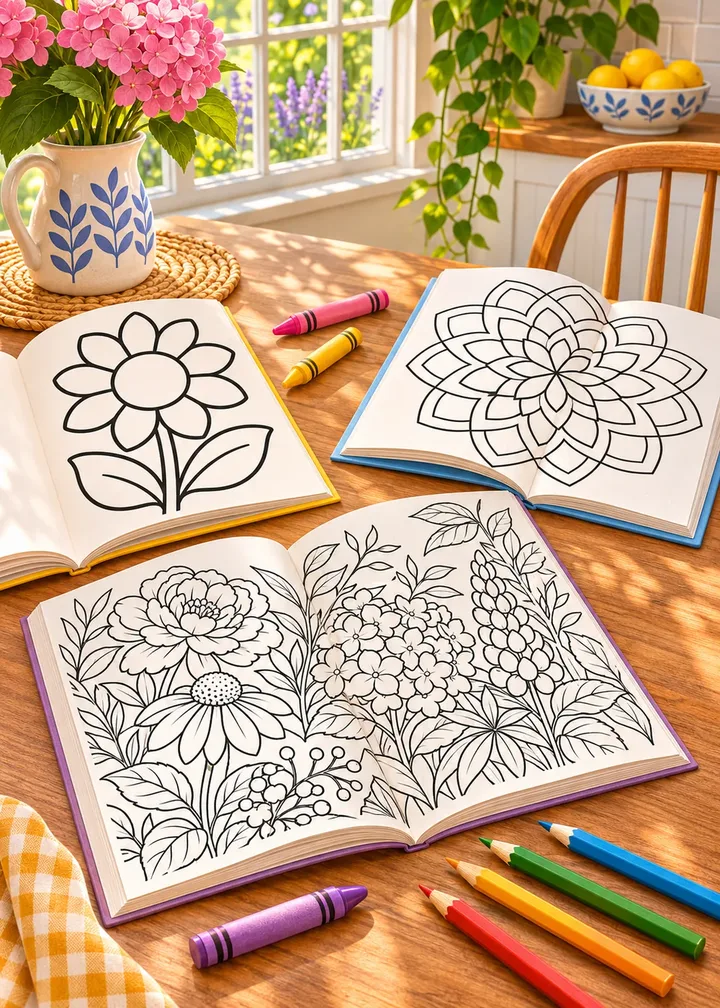
The single biggest factor is the size of the spaces to fill and the thickness of the outlines. Thick, dark lines act like a little wall that helps small hands stay inside a shape; fine lines and tiny spaces reward older kids who have more control. Children develop at their own pace, so treat the ages below as a starting point, then adjust to the child in front of you.
| Age | Lines and spaces | Best subjects | Tools that suit |
|---|---|---|---|
| 2–3 | Very thick lines, one big object per page | Animals, fruit, vehicles | Chunky crayons |
| 3–5 | Thick lines, large simple shapes | Animals, shapes, simple scenes | Crayons, washable markers |
| 6–8 | Medium lines, small scenes with a few details | Favorite animals, vehicles, ocean | Colored pencils, markers |
| 8–12 | Finer lines, full scenes with backgrounds | Space, wildlife, fantasy, patterns | Colored pencils, fine markers, gel pens |
| Teens | Fine lines, intricate patterns | Mandalas, botanicals, detailed animals | Pencils, gel pens, markers |
Toddlers and preschoolers (2–5)
Most toddlers start with scribbling: big, sweeping arm movements on large paper, long before they try to fill a shape. A first coloring book should feel like an invitation to that scribbling: one large, familiar object per page, outlines that are bold and dark, and lots of open space. Loose sheets or pages that tear out cleanly are often easier than a thick bound book for this age, since little hands flip and crumple pages with enthusiasm.
Skip anything with small enclosed areas. A three-year-old does not see “a flower with twelve petals”; they see a gray blur of lines.
Early school years (6–8)
From about six, many children enjoy small scenes: a puppy in a garden, a submarine with a few fish. Medium-weight outlines still help, but the spaces can shrink. This is also the age when colored pencils start to feel good in the hand, so paper that holds a little layering becomes worth checking.
Look for a mix of quick pages and longer ones. A book where every page takes an hour can feel like homework at seven.
Ages 8–12: detail, backgrounds and real subjects
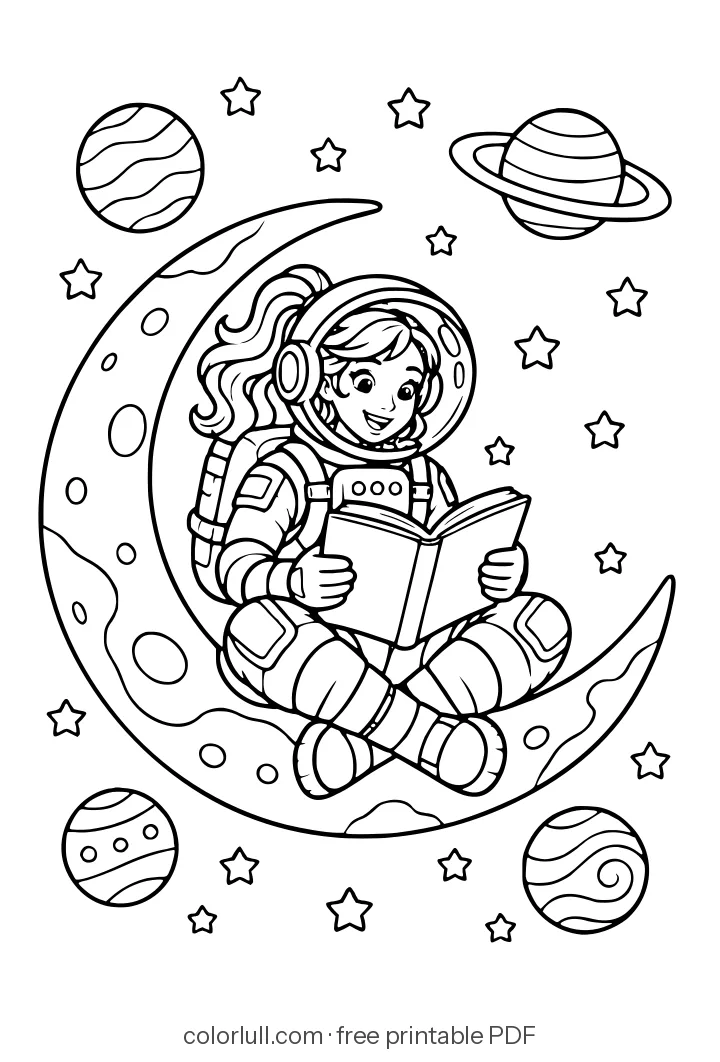
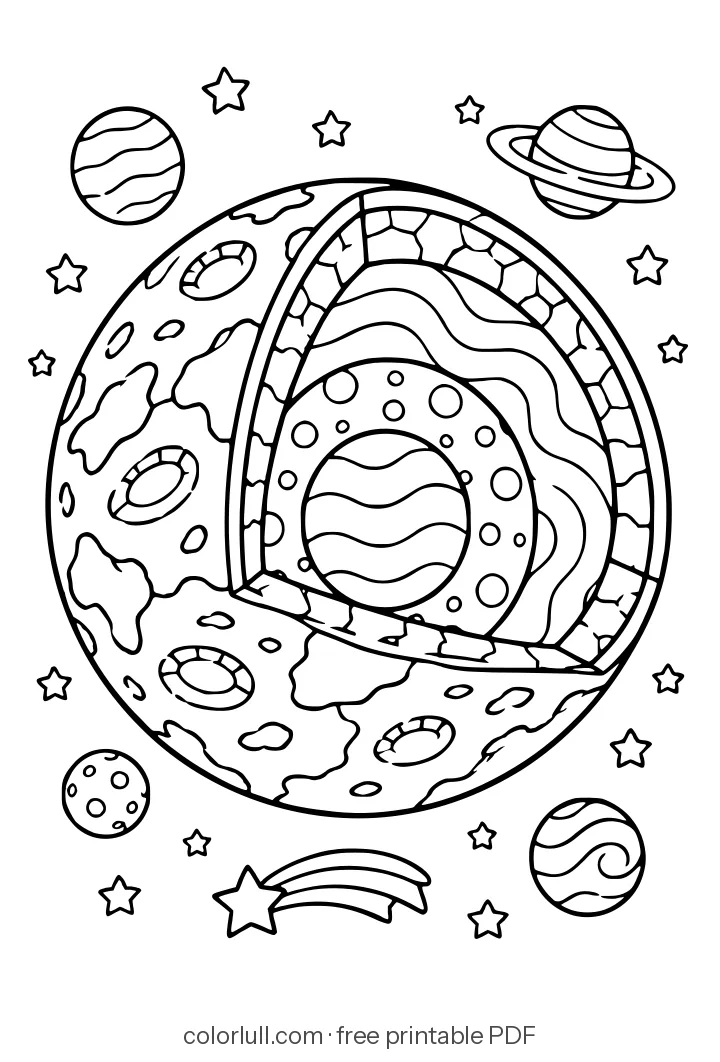
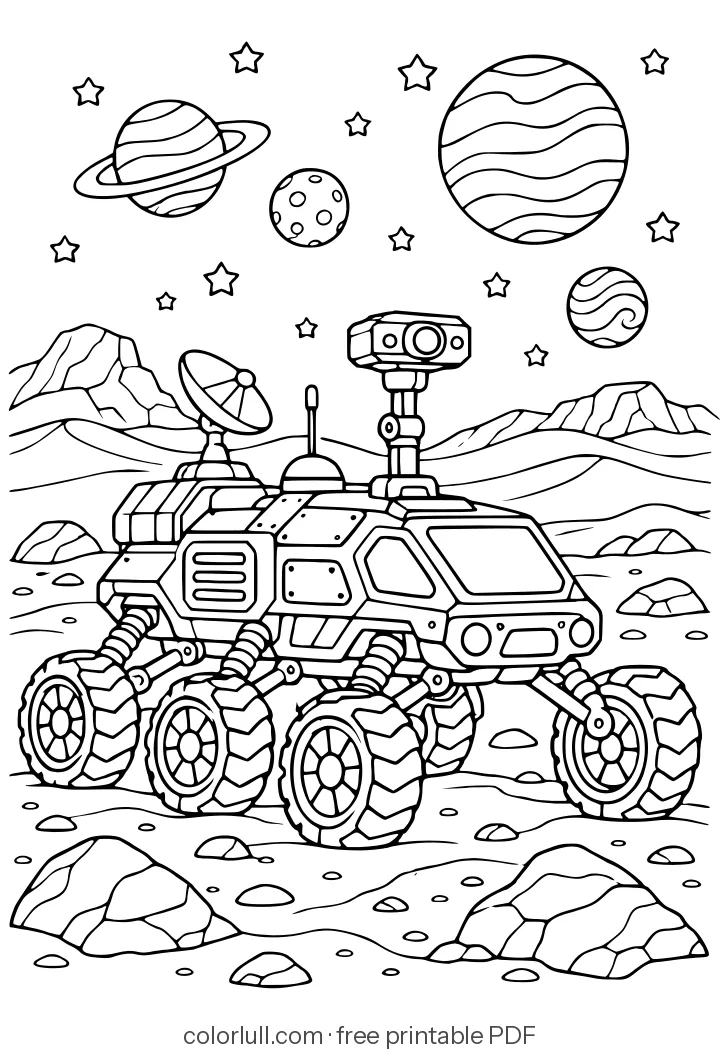
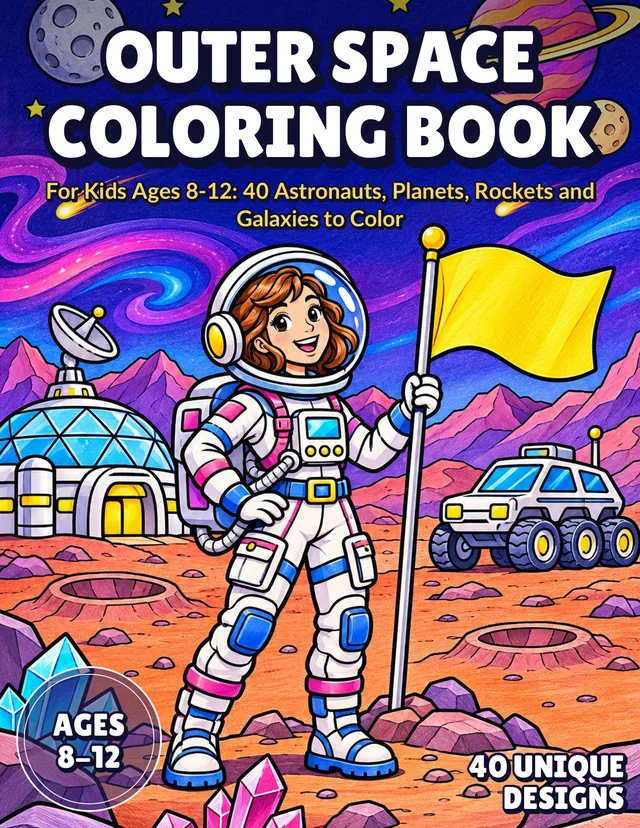
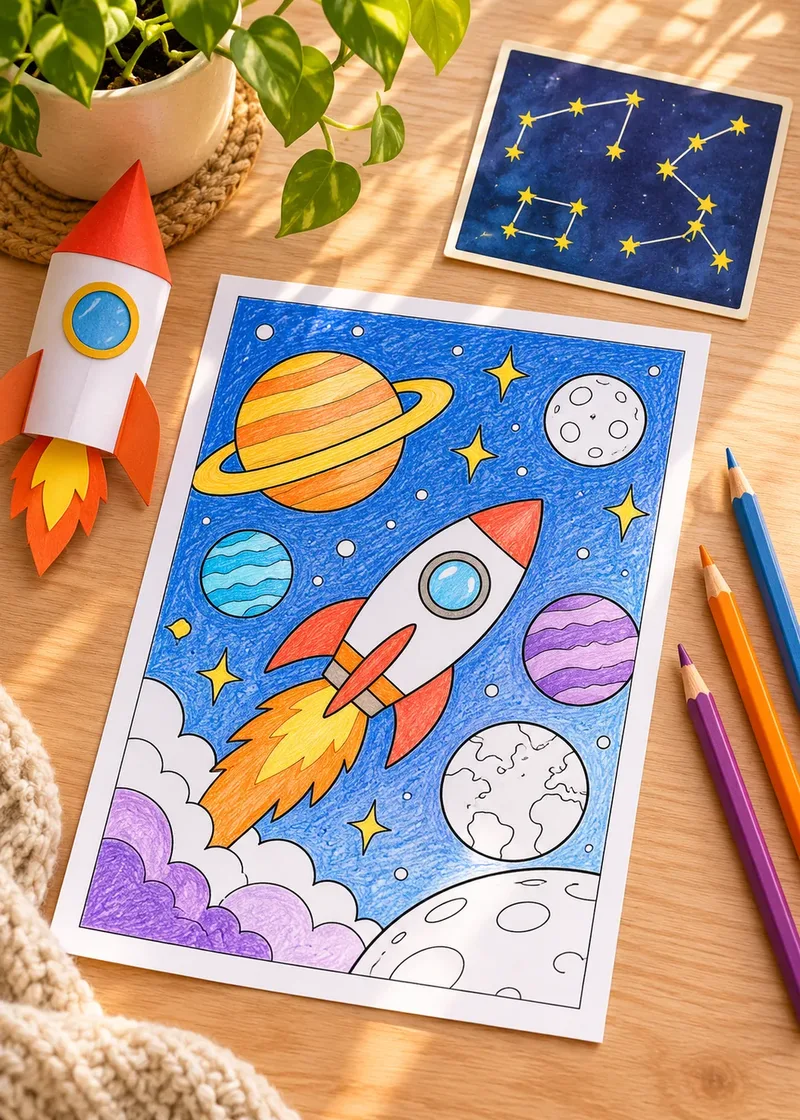
Kids from eight to twelve are often ready for full illustrated scenes: a subject plus a background, a sky to fill, small details to discover. Many of them prefer books that feel less “little kid” and more like real illustration, with subjects pulled from science, nature or adventure. Space is a favorite at this age because there is so much to color: planets with bands and rings, rockets, astronauts, galaxies that can go any color they like. For ideas beyond the book, our guide to space coloring activities for kids pairs pages with simple science facts.
Teens: the same books adults use
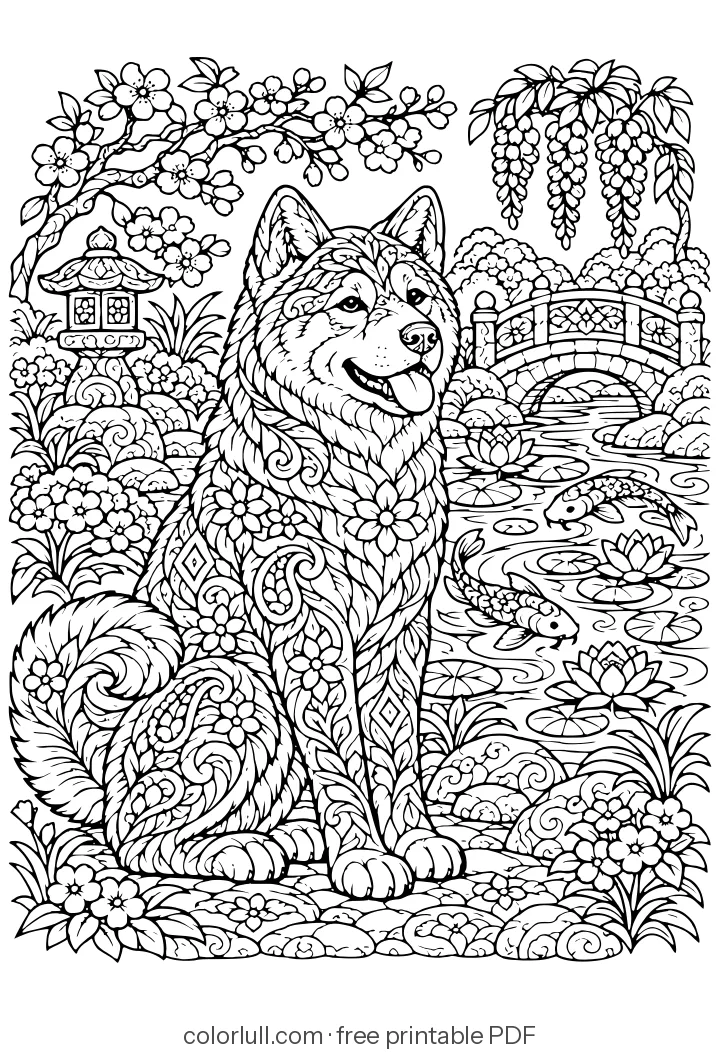
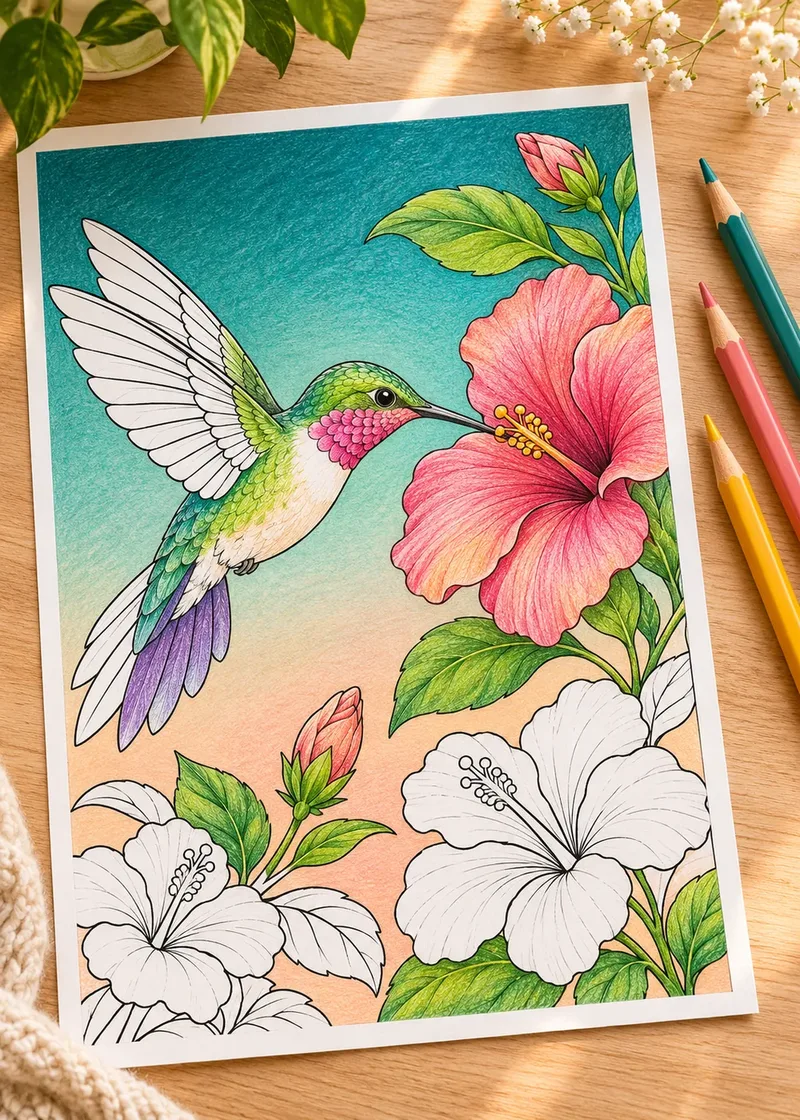
Many teens skip “kids” books altogether and reach for the intricate pattern and mandala books adults color. That is perfectly fine, as long as the theme is all-ages. If a teen in your house is drawn to this, our guide on how to start adult coloring covers tools and first projects that work for them too, and it is a nice way for a parent to color alongside.
Single-sided pages, paper and binding
These are the details that separate a book kids love from one that frustrates them, and they are often hidden at the bottom of a product listing.
Why single-sided coloring books are worth it
On a single-sided book, every picture has a blank back. That matters for three reasons:
- Markers can bleed through ordinary book paper. On a single-sided page, the bleed lands on a blank back instead of ruining the next picture.
- Finished pages can be torn out and taped to the fridge, mailed to a grandparent or pinned in a classroom without losing the drawing on the other side.
- The blank back gives you room for a scrap sheet: slip a piece of paper or thin card behind the page you are coloring to protect the rest of the book.
The trade-off is fewer pictures for the same thickness of book. If your child only uses crayons or colored pencils, double-sided pages are usually fine. If markers are involved, or you simply do not know what they will use, single-sided is the safer pick. Our guide to coloring books for markers goes deeper into bleed-through and how to cope with it.
Slip a sheet behind the page
Whatever the book, put a sheet of plain paper or thin card behind the page your child is coloring. It catches marker bleed, gives a smoother surface, and costs nothing.
Paper weight and page count
Most coloring books are printed on standard book paper, which is fine for crayons and colored pencils. Thicker paper handles markers, heavy pressure and erasing better. Listings rarely give the weight, so look for words like “thick”, “heavy” or “marker-friendly”, and check reviews for comments about bleed-through.
When you print pages at home, you control the paper: everyday 20 lb copy paper works for crayons and pencils, while 65 lb cardstock stands up to markers and small hands. Our guide to the best paper for printing coloring pages compares the options.
For page count, more is not always better. Thirty to fifty pages is plenty for most kids; a 200-page book full of near-identical outlines tends to get abandoned halfway.
Page size and binding
A large page (8.5 × 11 inches, US Letter) gives room for big arm movements and full scenes, and it is the most common size for kids’ coloring books. Small travel-size books are handy for restaurants and car rides but leave little room for younger children.
Glued (perfect-bound) books are the most common; press the spine gently open before coloring so the page lies flatter. Spiral binding lies completely flat, which helps beginners, but loose pages can tear at the coil. Hardcover coloring books are sturdy for travel and gift-giving.
Pick a theme that holds their interest
A theme your child chose themselves is the best predictor that a book gets used. Some reliable favorites:
- Animals: pets, farm animals, wildlife and dinosaurs work at every age; only the level of detail changes.
- Space: planets, rockets and astronauts, especially popular from about 6 to 12.
- Ocean: fish, whales, coral and submarines, with lots of blue and green to play with.
- Vehicles: trucks, trains and planes for the younger end of the range.
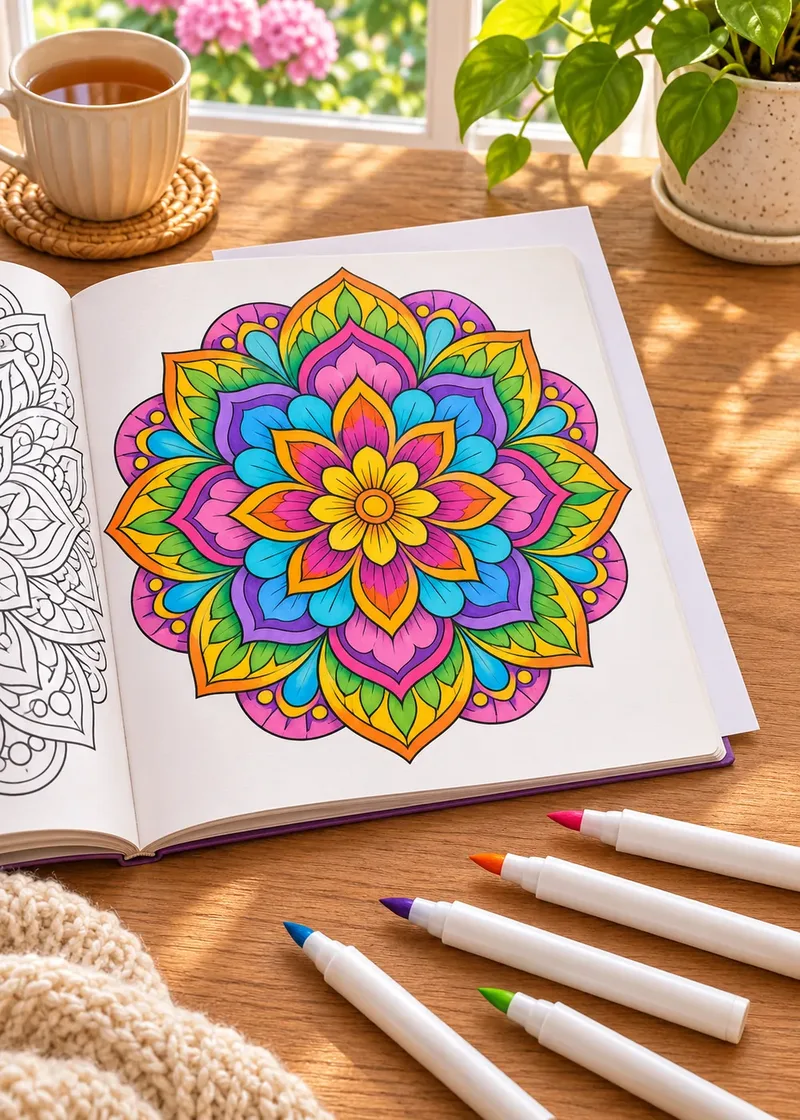
- Patterns and mandalas: for older kids and teens who enjoy calm, repetitive coloring.
Licensed character books are tempting, but quality varies a lot: some are carefully printed, others are thin paper with blurry, recycled outlines. Judge them by the same criteria as any other book rather than by the character on the cover.
Try before you buy with a free printable
The simplest way to check the right level of detail is to print a page and watch your child color it. If they fill it happily and ask for another, you have found the level. If they stop after a corner, try something simpler; if they rush through it in two minutes, go a step more detailed.
Browse our free printable coloring pages for a quick test: space and animal pages suit a wide range of ages, and pattern pages are a good test for older kids and teens.
The two-page test
Print one simple page and one detailed page on the same theme. Let your child pick which to color first. The one they choose, and how long they stay with it, tells you which kind of book to buy.
Red flags to skip
A few signs that a coloring book will disappoint, whatever the price:
- Gray, pale or fuzzy lines. Lines should be crisp and black. Gray or pixelated outlines are hard to see and look messy once colored.
- Pictures cut off at the edge of the page or running into the spine, where they are impossible to color.
- Too much detail for the age. Tiny spaces on a book labeled for preschoolers lead to frustration, not fine motor practice.
- The same picture over and over, flipped or resized to fill pages.
- Thin paper with pictures on both sides for a child who loves markers.
- No sample pages. If you cannot see inside the book, you cannot judge the lines. Look for interior previews before you buy.
Coloring books as gifts and stocking stuffers
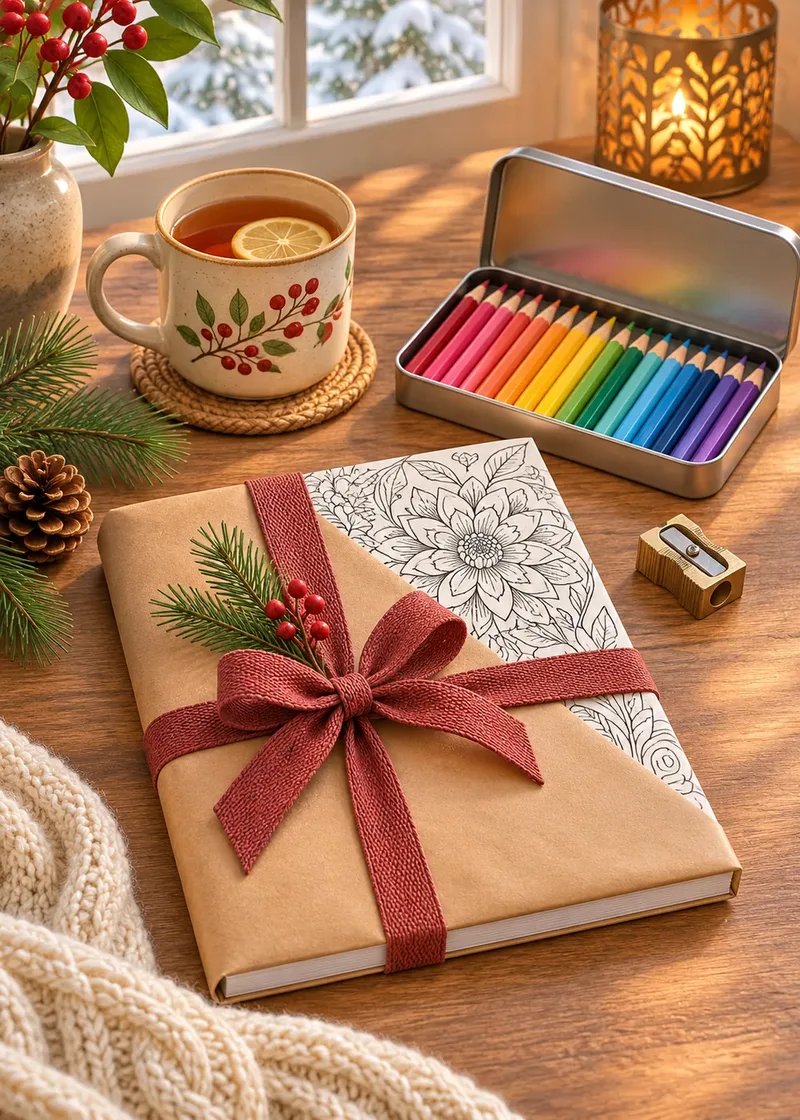
A coloring book is one of the easiest gifts to get right: screen-free, light to ship, easy to slip into a stocking, and something siblings and parents can enjoy together. A few habits make it a gift that gets used rather than one that gets shelved.
Build a simple coloring gift set
- Pick the book first. Choose the detail level and theme with the age guide above.
- Add tools that suit the age. Chunky crayons for little ones, a small set of colored pencils and a sharpener from about six, gel pens for older kids and teens.
- Include a few starter pages. Print two or three free pages on the same theme so they can start right away, even before the book is opened.
- Add a pencil case or zip pouch. It keeps the set together and makes it easy to take on trips.
- Write a small note. Suggest a first page, or promise to color one together.
For art supplies, check the age labels on the package, especially for children under three. In the United States, art materials sold to consumers carry a label stating that they conform to ASTM D-4236, the standard for labeling art materials for chronic hazards: look for it on crayons, markers and paints.
For older kids, gel pens make a fun upgrade; our guide to coloring with gel pens explains how to use them on coloring pages without smudging. And if the grown-ups in the family color too, our ideas for gifts for adult colorists round out a coloring-themed holiday. Coloring side by side is also a lovely way to wind down; see our evening coloring routine for a gentle way to make it a habit.
Frequently asked questions
What age should a child start coloring books?
Many toddlers begin scribbling with chunky crayons between their first and second birthday, and simple coloring books with one big, thick-lined picture per page usually suit children from about two or three. Every child develops at their own pace, so follow their interest rather than a fixed age.
What kind of coloring book is best for an 8-year-old?
Most 8-year-olds enjoy full scenes with a background, finer lines and a subject they care about, such as space, animals or the ocean. Single-sided pages are a plus if they use markers.
Are single-sided coloring books worth it?
Yes, if your child uses markers or likes to tear out and display pages. Each picture has a blank back, so bleed-through never ruins the next drawing; with crayons or colored pencils, double-sided books are usually fine.
How detailed should a coloring book be for a 5-year-old?
Look for thick, dark outlines and large, simple shapes, with a few small details at most. If your child stops after coloring one corner, the page is probably too detailed.
Can older kids use adult coloring books?
Yes. Many teens and some tweens love intricate pattern and mandala books made for adults. Just check that the theme and content are suitable for all ages.
How many pages should a kids’ coloring book have?
Thirty to fifty pages is plenty for most children. Variety and the right level of detail matter more than a high page count.