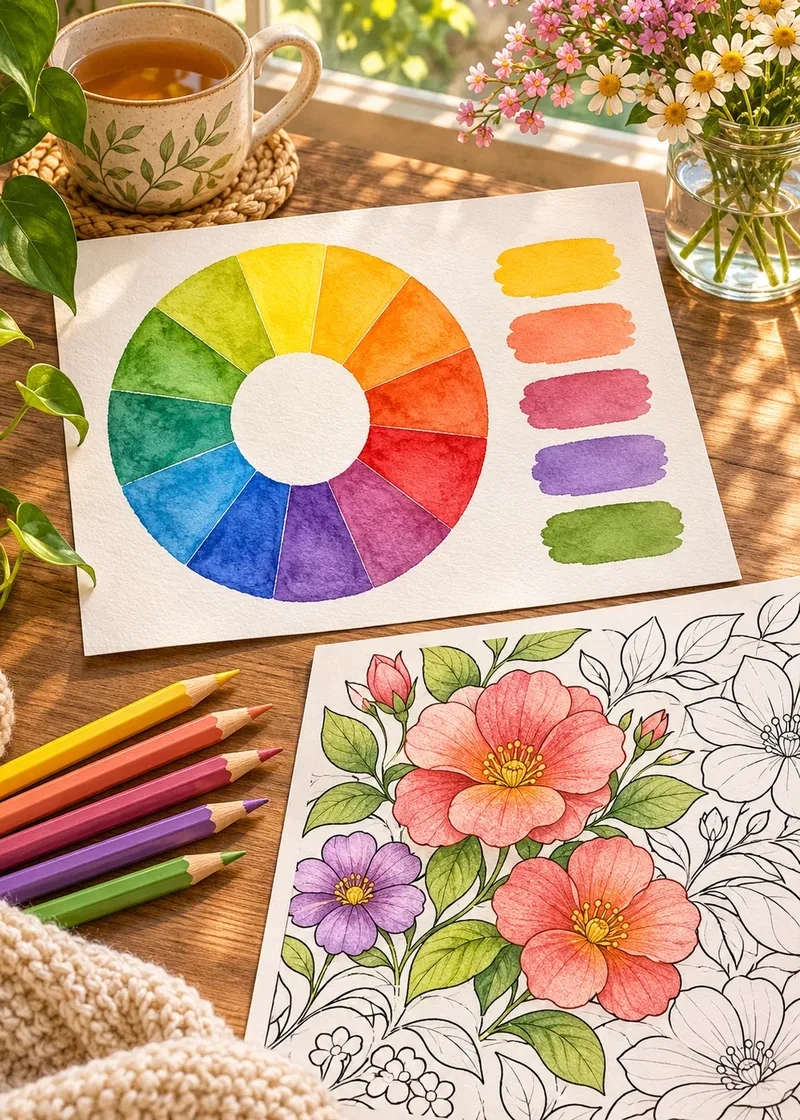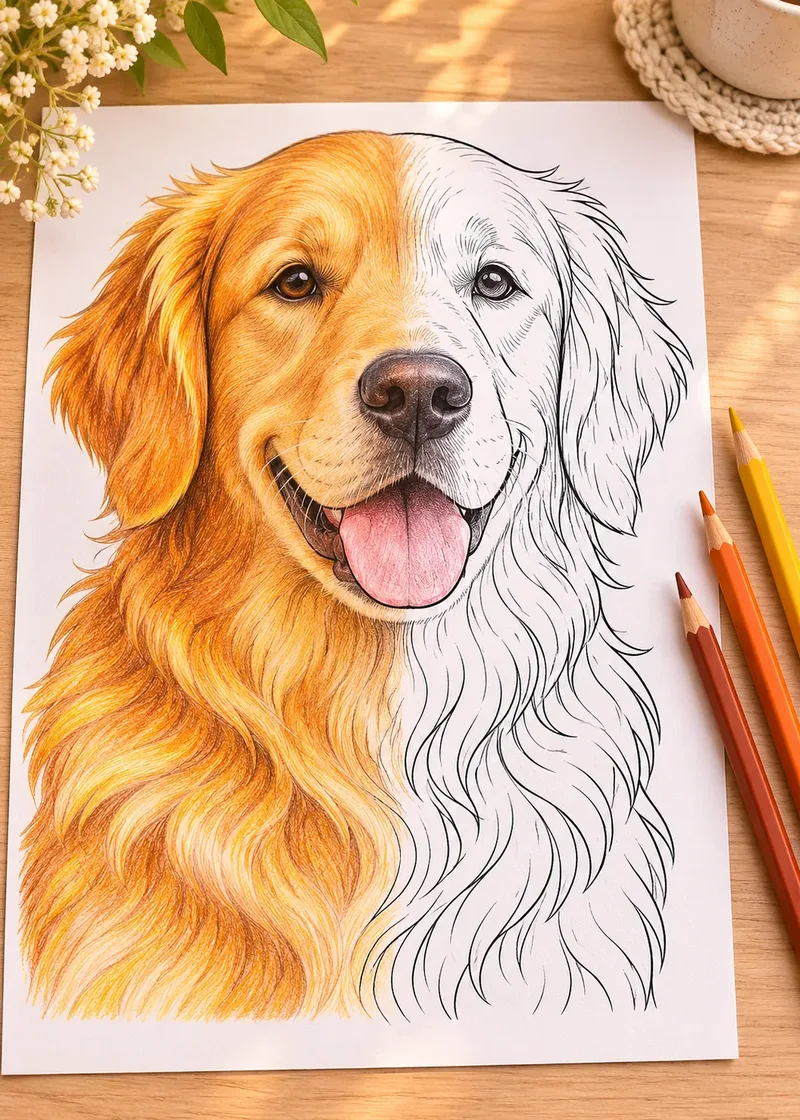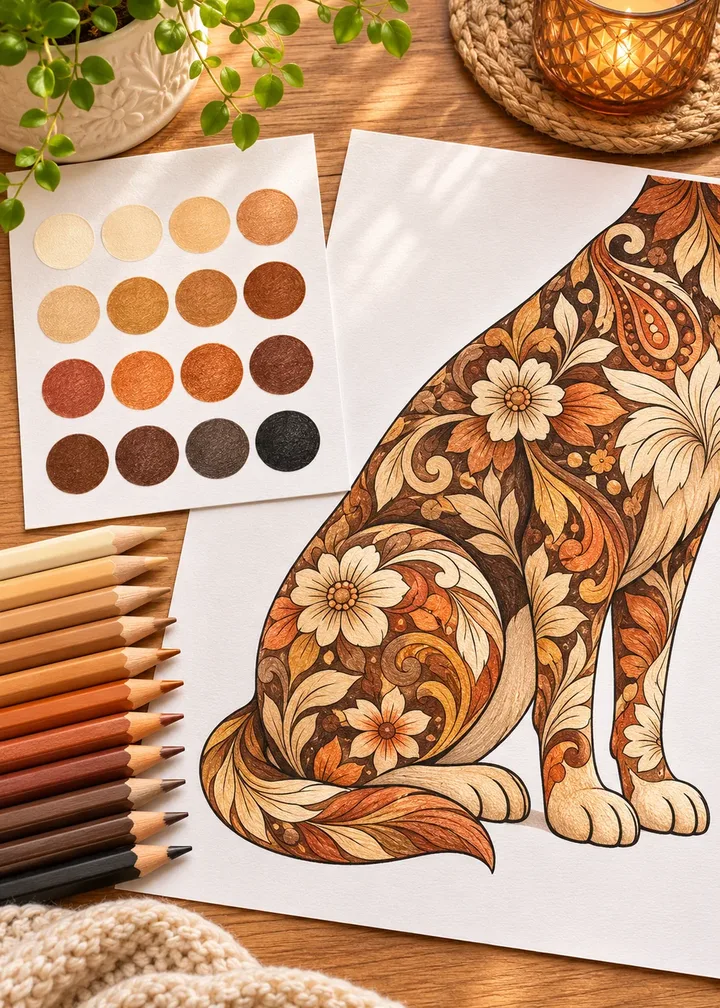
The right dog coat color palettes make the difference between a flat, crayon-brown dog and one that looks soft enough to pat. The short answer: no coat is a single color. Each one is three to five pencils, layered from the lightest to the darkest, with the paper left white where the light hits.
Below you will find twelve ready-to-use recipes, one per coat, from golden and chocolate to black, white, brindle and merle. Each palette uses generic color names you can match to any pencil set, with the layering order and the usual mistakes.
In short
- Every coat is built from 3 to 5 colors, applied light to dark.
- Black dogs need blue, violet or brown under the black, never black alone.
- White dogs are colored in the shadows only; the paper is the white.
- Patterns (brindle, merle, sable, spots) go on top of a finished base coat.
- Match the nose to the coat: black for most dogs, brown for chocolate, slate for blue.
How to use these dog coat color palettes
Each recipe follows the same four roles, so you can adapt it to your own set.
- Base (light): the lightest color, laid over the whole coat with light pressure, except the highlights.
- Mid tone: the true color of the dog, added on the shadow side of every clump of fur.
- Dark: the deepest color, only in the gaps between clumps, under the ears, the chin and the belly.
- Accent: a small amount of a color that warms or cools the coat, used sparingly at the end.
Work in short strokes that follow the direction of the fur. If you are new to that part, our step-by-step guide on how to color dog fur shows the strokes and highlights; this article is about the colors.
About the hex codes
The swatches show a hex code for each color so you can compare it with your pencils on screen. Pencils never match a screen exactly: test each one on scrap paper and pick the closest shade you have.
Warm coats: golden, red, cream and chocolate
Warm coats are the easiest place to start. Their secret is temperature: a cool shadow color would look dirty, so the darks stay in the brown family.
Golden and yellow coats
A golden coat is not yellow. It is a pale cream base, a golden mid tone, and ochre and sienna in the shadows. Keep the top of the head and the back almost pale, where the light falls.
- Cream yellow
#F6E3B4base layer - Golden yellow
#E8B04Amid tone - Yellow ochre
#C98A2Eshadows - Raw sienna
#A0612Adeep gaps - Warm brown
#6B4226small accents
Common mistake: pressing hard with golden yellow from the start. It fills the paper tooth, leaving no room for darker layers.
Red and ginger coats
Red coats glow when the orange is kept in the light areas and the brick red goes only where the fur turns away from you. A touch of dark umber in the deepest folds stops the coat from looking like a fox.
- Peach
#F3C29Bbase layer - Orange ochre
#D9823Bmid tone - Burnt orange
#B5562Ashadows - Brick red
#8A3B22deep gaps - Dark umber
#4A2A1Cdarkest folds
Cream and apricot coats
Cream and apricot dogs are pale everywhere, so contrast comes from very soft shadows. Use a warm gray, not a brown, for the shade under the ears and chin, and leave plenty of paper showing.
- Ivory
#FBF3E2base layer - Pale apricot
#F4D2AEmid tone - Light tan
#DDB487shadows - Warm gray
#A89A8Adeepest shade
Chocolate and liver coats
Chocolate (also called liver) is a true brown pigment, warmer and redder than black. Build it with a reddish light brown first, so the coat has life under the darker layers, and keep a light tan for the shine on the forehead and shoulders.
- Light tan
#C99A6Ehighlights - Light sienna
#B9825Abase layer - Medium brown
#8B5A3Cmid tone - Chocolate
#5E3A28shadows - Dark brown
#3B2418deep gaps
How do you color a black dog?
Black pencil alone looks flat and waxy and leaves no room for shine. The fix is to build the dark from colored layers and use black only at the end.
Lay indigo over the whole coat, then dark brown, leaving the shine areas (the top of the head, the shoulders, the nose bridge) lighter. Add black only in the deepest gaps. Finally, touch the highlights with a blue-gray: that cool gleam is what makes a black coat read as glossy.
- Blue-gray
#7F8DA3shine - Indigo
#2E3157base layer - Dark violet
#3E2D4Acool shadows - Dark brown
#3B2A22warm depth - Black
#1A1A1Adeepest gaps
Warm or cool black?
Cool layers (indigo, violet) suit a dog in daylight or outdoors; warm layers (dark brown, a touch of burnt orange) suit a dog by a fire or in evening light. Pick one direction and keep it for the whole dog.
Gray and blue coats
A “blue” dog is a diluted black: slate gray with a cool sheen. A common mistake is to use one gray pencil for everything. Instead, combine a cool gray, a slate and a hint of lavender, and save charcoal for the gaps.
- Pale gray-blue
#D3DAE3base layer - Lavender gray
#B5ADC4soft shadows - Cool gray
#9AA3ADmid tone - Slate
#5E6B78shadows - Charcoal
#3A4049deep gaps
How do you color a white dog on white paper?
You color the shadows, not the dog. The paper is the white, so most of a white coat stays untouched. Put a pale lavender or light cool gray where the fur turns away from the light, a slightly darker blue-gray in the deepest folds, and a whisper of warm cream where the sun hits.
- Paper white
#FFFFFFleft open - Warm cream
#F7EBD3sunlit areas - Pale lavender
#DCD3E8soft shadows - Light cool gray
#C8CDD3shadows - Blue-gray
#95A1B0deepest folds
A colored background helps a white dog more than anything else: a soft green, sky blue or warm wall color makes the white edges visible without outlining them. Our guide to coloring backgrounds has simple options that keep the dog in focus.
Patterned coats: brindle, merle, sable and more
For every pattern below, the rule is the same: color the base coat first, then the pattern on top. Patterns drawn on bare paper look pasted on.
Tan-and-black (tricolor)
Tricolor dogs are black, tan and white. The tan sits in predictable spots called points: eyebrows, cheeks, the inside of the legs, the paws and under the tail. Use the black recipe for the black, tan and rust for the points, and cool gray in the white.
- White
#FFFFFFwhite areas - Cool gray
#B8BEC6white shadows - Tan
#C68A4Etan points - Rust
#9C5A2Etan shadows - Indigo
#2E3157black underlayer - Jet black
#1E1E22black areas
Brindle
Brindle is a warm base (fawn, red or cream) with darker stripes on top, a bit like a tiger’s coat, but softer and often uneven. Color the whole dog with the fawn and golden tan first. Then add the stripes in dark brown, following the curve of the body, with black only in the darkest streaks.
- Light cream
#EFD9B8highlights - Fawn
#D9AE7Ebase layer - Golden tan
#C08A4Fbase shadows - Dark brown
#4A2F22stripes - Black
#1A1A1Adarkest streaks
Common mistake: stripes in a straight, even rhythm. Real brindle is broken and irregular: vary the width and leave gaps.
Merle
Merle is a marbled coat: irregular dark patches over a lighter, diluted base. The blue merle version below is gray-blue with black patches; for red merle, use the cream and chocolate recipes instead. Merle dogs often have blue or partly blue eyes, a lovely detail to bring out.
- White
#FFFFFFwhite trim - Pale silver
#DADDE2base layer - Blue-gray
#8F9BAAmarbling - Slate
#4F5A67patch edges - Black
#1C1C20dark patches
Lay the silver and blue-gray in soft, cloudy shapes, then add ragged black patches and soften their edges with slate.
Spotted coats
Spotted dogs are white with round black or brown spots. Shade the white with a light cool gray, then color the spots as small solid shapes, using the black recipe or the chocolate recipe.
- White
#FFFFFFbase coat - Light cool gray
#C8CDD3body shadows - Medium brown
#8B5A3Cbrown spots - Indigo
#2E3157spot underlayer - Black
#1A1A1Ablack spots
Sable
Sable hairs are light at the root and dark at the tip, so the coat looks lighter on the chest and legs and darker along the back, ears and tail. Color the whole dog in light fawn and golden tan, then flick the dark tips on top with short strokes, densest along the spine.
- Light fawn
#E6C79Abase layer - Golden tan
#C7924Fmid tone - Red brown
#8E4F2Bshadows - Dark sable
#3A2A22hair tips
Quick reference table: dog coat colors at a glance
| Coat | Base | Mid and shadow | Dark and accent |
|---|---|---|---|
| Golden | Cream yellow | Golden yellow, yellow ochre | Raw sienna, warm brown |
| Red and ginger | Peach | Orange ochre, burnt orange | Brick red, dark umber |
| Cream and apricot | Ivory | Pale apricot, light tan | Warm gray |
| Chocolate | Light sienna | Medium brown, chocolate | Dark brown |
| Black | Indigo | Dark violet, dark brown | Black, blue-gray shine |
| Gray and blue | Pale gray-blue | Lavender gray, cool gray | Slate, charcoal |
| White | Paper | Pale lavender, light cool gray | Blue-gray, warm cream |
| Tricolor | Indigo, tan | Rust, cool gray | Jet black |
| Brindle | Fawn | Golden tan | Dark brown, black stripes |
| Blue merle | Pale silver | Blue-gray | Slate, black patches |
| Spotted | White | Light cool gray | Black or brown spots |
| Sable | Light fawn | Golden tan, red brown | Dark sable tips |
Matching eyes and noses to the coat
Eyes and nose follow the coat’s pigment: a chocolate dog has a brown nose, a blue dog a slate-gray one, and most other coats a black nose with dark eye rims.
| Coat | Nose | Eyes |
|---|---|---|
| Golden, red, cream | Black or dark brown | Dark brown |
| Black, tricolor | Black | Dark brown |
| Chocolate | Medium to dark brown | Amber, hazel |
| Gray and blue | Slate gray | Amber, gray-brown |
| Merle | Black or mottled | Brown, blue, or one of each |
Leave a tiny dot of white paper in each eye and a shine on the nose; a white gel pen can bring them back at the end (see our guide to coloring with gel pens).
How to make your own coat palette from a photo
Your dog may not match any recipe exactly. A custom palette takes five minutes.
Five steps to a custom coat palette
- Choose a clear photo. Daylight, no flash, and the coat in focus.
- Squint at it. Squinting hides the detail and shows three values: the light, the middle and the dark.
- Name each value with a color. Is the light a cream, a gray or a gold? Is the dark a brown, a black or a slate?
- Swatch the candidates side by side. Layer them on scrap paper, light to dark, and compare with the photo.
- Keep the winners together. Write the colors on the back of the page or on a sticky note for next time.
The same thinking works for any subject. For the theory behind it, read how to choose a color palette, and for smooth transitions between the layers, see colored pencil blending for beginners.
Can you use these palettes with markers?
Yes. The same colors and the same order work with alcohol or water-based markers: base, then mid tone, then dark. Markers show hairs poorly, so lay the base and mid tone with markers, then add texture with colored pencils on top. If markers are your favorite tool, our guide to coloring books for markers explains which paper holds up.
A coat that turns too dark or waxy can usually be rescued: see how to fix coloring mistakes, and how to shade coloring pages for where light and dark should fall.
Ready to practice? Print a page from our free coloring pages, pick one recipe, and try it on a small area first.
Frequently asked questions
What colors do I use for a golden dog?
Start with a cream yellow base, add golden yellow as the mid tone, then yellow ochre and raw sienna in the shadows. Leave the top of the head and back lighter.
How do I color a black dog without using only black?
Layer indigo and dark brown first, keep the shiny areas lighter, and use black only in the deepest gaps. Finish the highlights with a blue-gray to make the coat look glossy.
What colors make gray fur?
Combine a pale gray-blue base with a cool gray and a slate, and add a hint of lavender in the soft shadows. Charcoal goes only in the deepest folds, so the coat keeps its silver sheen.
How do I color brindle stripes?
Color the whole dog with a fawn and golden tan base first, then add irregular stripes in dark brown that follow the curve of the body. Use black only in the darkest streaks, and vary the stripe width.
Can I use the same recipes with markers?
Yes. Keep the same colors and the same light-to-dark order. Markers work best for the base and mid tones; colored pencils on top add the fur texture.
How many colored pencils do I need to color a dog?
Three to five per coat color is enough, plus a white or very light color for blending.